
The field of behavioral health is growing quickly, and the job of a Registered Behavior Technician (RBT) is very important for helping people with behavioral and developmental issues. If you have been looking into jobs in applied behavior analysis (ABA), you might be curious about what is an RBT is, what they do, and what you can expect in terms of RBT jobs, RBT salary, and career growth.
This guide tells you everything you need to know about RBTs, including what they do at work, how much money they can expect to make, what the job market looks like, and how to get started in this rewarding field.
What is an RBT? Knowing What They Do
Registered Behavior Technician (RBT) is a paraprofessional credential given to people who provide ABA therapy under the supervision of a Board Certified Behavior Analyst (BCBA).
A lot of people want to know what is an RBT job is. An RBT is trained to use behavior-analytic methods, gather data, and help clients make measurable progress in their skills and behaviors.
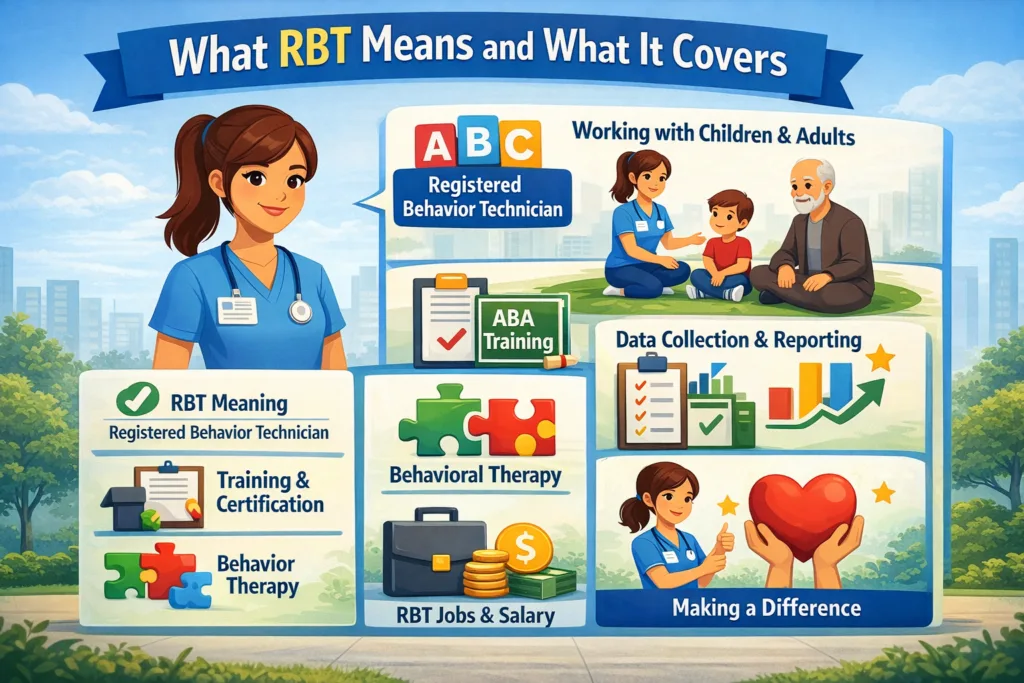
What is RBT Meaning and What It Covers
The meaning of RBT is more than just a name. RBTs help clients, usually kids with autism or other developmental disorders, in important ways by following evidence-based rules to:
- Encourage people to learn how to communicate, socialize, and live their daily lives.
- Use structured interventions to cut down on difficult behaviors.
- Collect the right information to keep track of progress and help with treatment.
What is an RBT therapy, in short? RBTs provide ABA therapy to make their clients’ lives better and help families and supervisors keep track of their progress.
What do RBTs do? Duties and Daily Tasks
If you want to be an RBT, it is important to know what they do. The job description for a registered behavior technician includes working directly with clients, collecting data, and working with supervisors and families.
1. Carry out behavior plans
RBTs are in charge of putting into action behavior intervention plans (BIPs) that their supervising BCBAs make. This makes sure that behavioral strategies are delivered in the same way every time and helps clients make real progress toward their goals.
2. Gather and record information
Collecting data is one of the most important parts of an RBT jobs. RBTs keep track of how clients behave, how well they are learning new skills, and how well interventions are working. This paperwork lets BCBAs look at patterns, change their plans, and make smart choices about treatment.
3. Help people learn new skills
RBTs help clients learn new skills, such as how to talk to and interact with others, as well as academic and life skills. RBTs help a client become more independent and grow as a person by encouraging good behavior and teaching them useful skills.
4. Help cut down on bad behavior
A lot of clients need help to safely stop doing things that are hard for them. RBTs use ABA methods to help people with behaviors like aggression, self-harm, or being disruptive. By consistently using interventions, they help clients stay safe and improve their daily lives.
5. Talk to your bosses and family members
RBTs keep BCBAs and families up to date on how their clients are doing. Good communication makes sure that treatment is in line with goals and that families can help with interventions outside of therapy sessions.
What a Registered Behavior Technician Does
The RBT jobs description is broad and requires both technical and people skills.
Main Duties Include:
- Giving direct ABA therapy under supervision
- Keeping an eye on and accurately recording client progress
- Putting in place programs to reduce bad behavior and teach new skills
- Following ethical rules and acting professionally
- Being able to talk to families, clients, and bosses in a clear way
Necessary Skills:
- Being patient, understanding, and able to talk to people well
- Paying attention to details and making sure that records are correct
- Knowledge of ABA rules and methods
- Ability to work with clients in different places on a regular basis
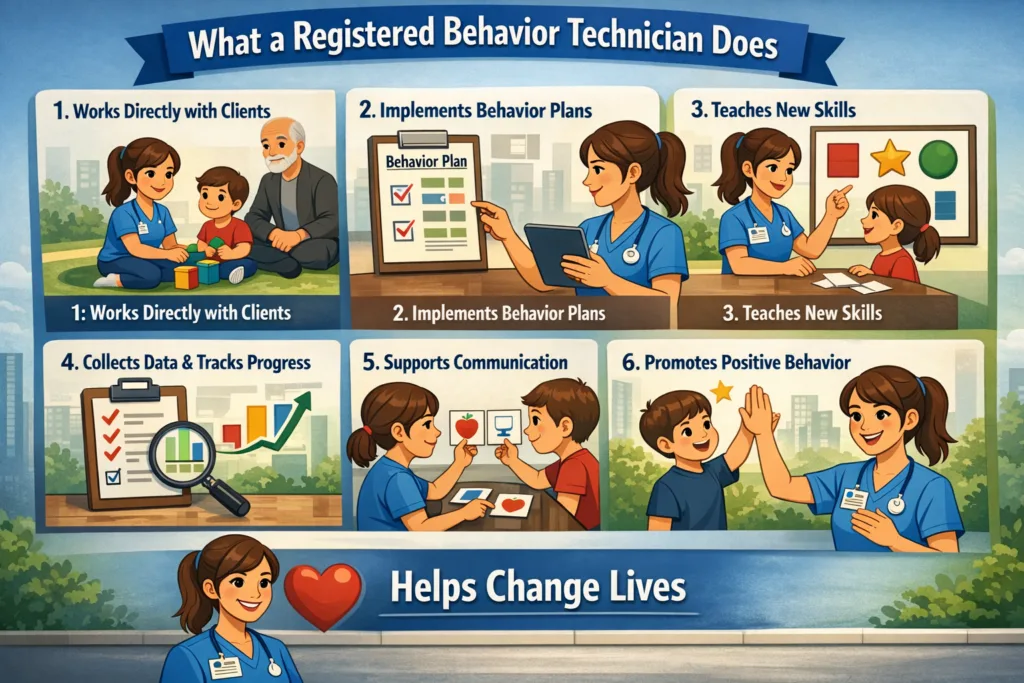
By reading the job description for a registered behavior technician, people who want to become RBTs can better prepare for the job’s challenges and rewards.
A look at RBT pay and salary
People often ask about RBT pay when they want to know more about this career. Anyone thinking about this job should know how much the RBT makes.
Average Salary for RBT:
Pay by the hour: $16 to $25
Depending on experience, location, and type of employer, the annual salary ranges from $33,000 to $52,000.
Paid training, continuing education, and chances to move up in your career are some of the benefits that come with the job.
The amount of RBT pay may change depending on the setting. For instance, RBTs who work in schools or clinics may make more or less than those who work in people’s homes. RBT jobs pay well and give you the chance to grow professionally, even though they are all different.
Job Prospects: RBT Jobs and Opportunities
As ABA therapy becomes more popular for helping people with autism and other behavioral problems, the need for RBT jobs keeps growing.
Places Where People Work Often:
- Therapy centers and clinics
- Schools and programs for learning
- Therapy services at home
- Community programs and hospitals
If you are wondering what is an RBT job is, it is a rewarding career that lets you make a real difference while getting valuable experience in the field of behavioral health.
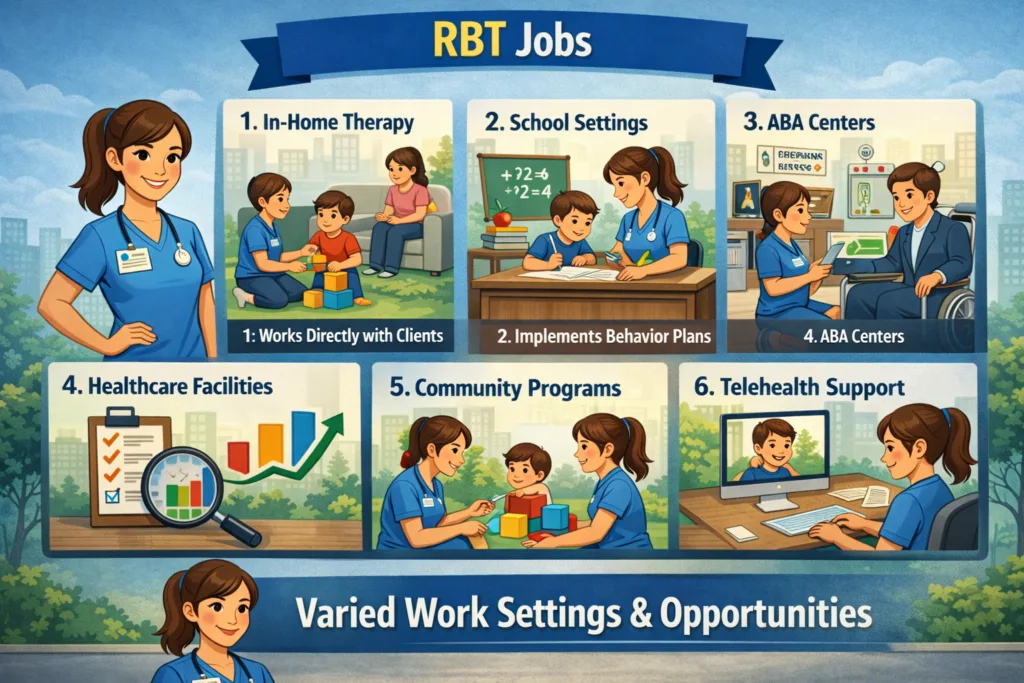
The U.S. Bureau of Labor Statistics says that the field of behavioral therapy and support will grow a lot over the next ten years, which means that qualified RBTs will have stable jobs.
Why Should You Think About Becoming a Registered Behavior Technician?
People who want to become an RBT should:
- Like helping people and making a real difference
- Want to work in ABA therapy
- Look for jobs that are flexible and offer chances to move up in your career.
RBTs can eventually move up to higher-level jobs like BCBA or supervisory positions with the right training, supervision, and ongoing professional development. These jobs come with more responsibility and pay.
Common Questions About RBTs
Q1: What does the acronym RBT mean?
A: RBT stands for Registered Behavior Technician, which is a type of ABA therapist.
Q2: What is an RBT?
A: RBTs carry out behavior plans, gather data, teach skills, help people stop doing things that are hard for them, and let supervisors and families know how things are going.
Q3: How much does an RBT make?
A: RBTs make between $16 and $25 an hour, depending on where they work, how much experience they have, and what kind of work they do.
Q4: What is a job as an RBT?
A: An RBT job includes giving direct ABA therapy under supervision, keeping track of clients’ progress, and helping them learn new skills and stop bad behaviors.
Q5: What is therapy with RBT?
A: RBT therapy is a type of ABA therapy that RBTs use to help clients improve their life, communication, and social skills.
Q6: What do you need to do to become an RBT?
A: Candidates must finish RBT training, pass a competency test, and work under the watchful eye of a BCBA.