

You’ve studied the material, completed the 40-hour training, and competency assessment, yet you feel anxious about the RBT exam. The sweaty palms, short of breath, and overthinking about what’s going to happen are making your heart race.
RBT exam anxiety can sabotage most well-prepared applicants. The never-ending stress, overthinking, and fear of failure can cause mental blocks and make you forget the familiar concepts. In addition, this constant anxiety about the exam often leads to candidates not performing well on the actual day.
The good news is that exam anxiety is common and manageable. Through stress management techniques and mind-relaxing practices, you can remain calm, confident, and focused. Let’s find out the triggers for exam anxiety and how you can overcome them.
Identifying Test Anxiety Triggers
RBT exam anxiety varies from student to student, making it important to identify the underlying factors that trigger stress and affect performance.
For RBT candidates, the test anxiety stems from:
- Perfectionism & Fear of Failure
- Lack of preparation
- Previous negative exam experience
- Uncertainty about exam format
- Low confidence
Understanding the cause of exam anxiety is important to manage it effectively.
Preparation Strategies to Reduce Anxiety
- Start Studying Early
Last-minute exam preparation is one of the biggest contributors to anxiety. Instead, make a realistic study plan that breaks down the exam content into small sections. When you start early, it helps:
- Improve long-term memory retention
- Increase confidence in your knowledge
- Reduce exam pressure
- Use Active Study Techniques
Active study techniques allow the student to engage directly with the material. Unlike a passive study technique, it allows the practical application of the concepts rather than memorizing. For instance, practice quizzes, mock exams, and flash cards enhance critical thinking skills and make your memory sharp.
- Take Full-Length Practice Exams
Taking practice exams helps you become familiar with the wording and structure of questions, making them easier to understand on the actual test. This familiarity reduces confusion and allows you to manage time effectively.
Relaxation and Mindfulness Techniques
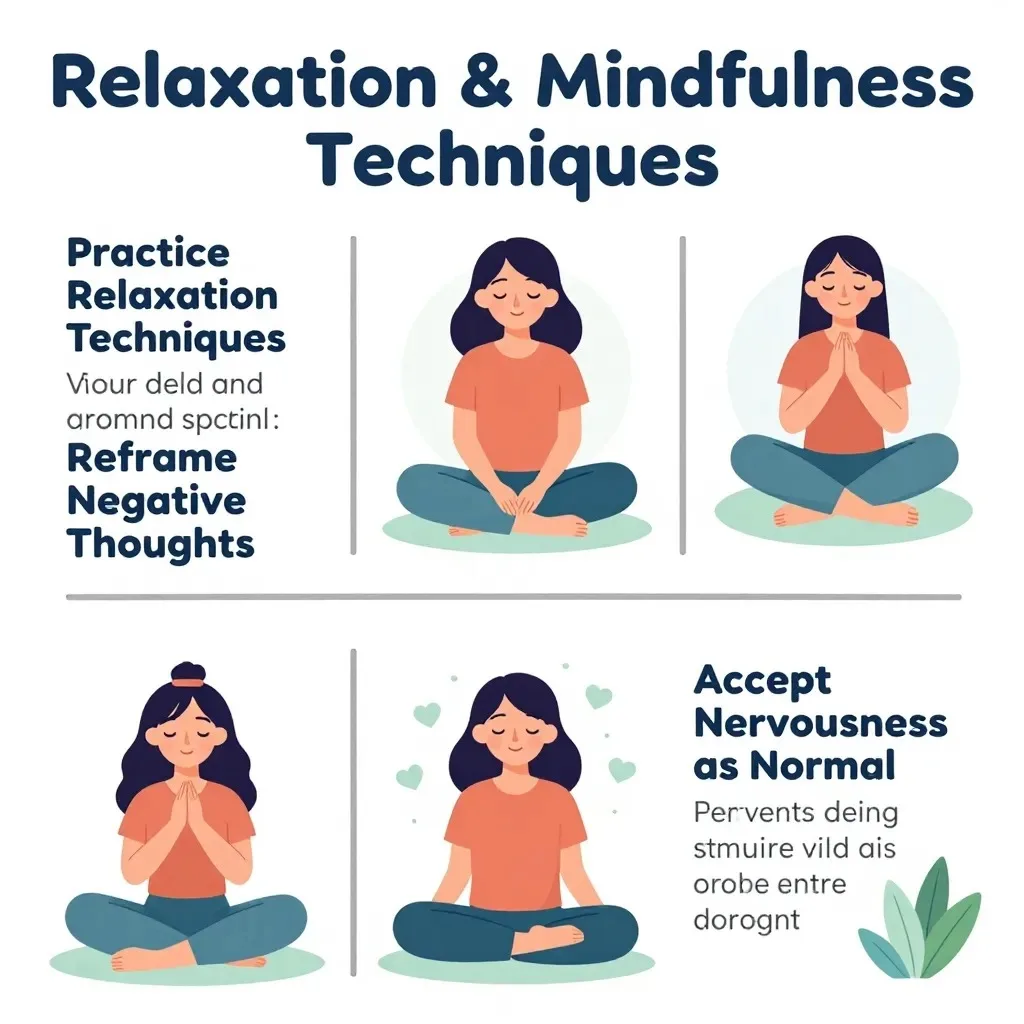
Below are some relaxation techniques you can practice to overcome your anxiety as the exam approaches:
Visualize a Calm and Successful Exam Experience
Imagine yourself sitting calmly at the test center. Visualizing yourself completing the exam will train your brain to associate the experience with calmness and confidence.
Practice Relaxation Techniques
Incorporating practice relaxation techniques will calm your nerves and reduce stress levels. Practicing deep breathing, meditation, and muscle relaxation before exam day ensures you can use them effectively during the test.
Reframe Negative Thoughts
Replace overthinking and fear of failure with positive, realistic thoughts. Positive reinforcement strengthens self-belief and promotes a mindset.
Accept Nervousness as Normal
As humans, it’s natural to feel nervous before important occasions like exam day; the key is learning how to manage those nerves effectively. So, embrace nervousness as a normal feeling and remind yourself that it does not define your ability or outcome.
Confidence-Building Through Practice
Here are some tips you can follow to build your confidence needed to ace the RBT exam:
- Solve Practice Tests
There are plenty of free RBT practice tests available online. Taking practice tests will prepare your mind to focus and manage time effectively. Moreover, it makes you familiar with exam format, style, and timings. When you have clear expectations of the exam, it reduces the fear of the unknown and keeps your mind calm.
- Identify and Work on Your Weak Areas
Figure out the topics and concepts you find difficult. Once you have identified the areas you need to work on, you can review them thoroughly. Moreover, note the mistake you’ve made during practice tests.
Analyzing your mistakes and weak areas will allow you to grasp concepts better. Moreover, it will reduce the chance of making the same mistake again.
- Gain Confidence Through Experience
If you are going to appear in the RBT exam, you must have cleared the competence exam and 40 hours of training. Acknowledge the fact that you already have a solid knowledge and foundation. This will elevate your confidence that you will be able to do well in exams.
Healthy Habits
Developing healthy habits plays an important role in overcoming RBT exam anxiety. Having proper sleep daily improves your focus and concentration needed to perform well on your exam day. When you are well-rested, you are likely to handle your nerves under pressure.
Eating balanced meals that include protein, whole grains, and healthy fats helps maintain stable energy levels. This allows you to enhance your memory and decision-making skills. Proper nutrition also supports emotional regulation, reducing irritability and stress.
Good sleep with a well-balanced diet strengthens your mental and physical resilience.
Day-of-Exam Stress Management

Test day can be nerve-wracking, but there are some easy stress management techniques to remain calm.
- Breathing Exercises
Breathing exercises are a simple yet effective way to keep your mind calm. By managing your breath, you can control your heart rate to stay focused and present during the exam.
Take a few deep breaths, inhale and hold them for a few seconds, and exhale. The key is to breathe from the diaphragm instead of the chest.
- Have a Good Sleep Before Exam Day
Sleep deprivation will worsen your anxiety. Additionally. It will also significantly impact your exam performance. Hence, getting an adequate sleep of 6 to 7 hours is important to manage your nerves and score well.
- Prep A Night Before
Preparing everything beforehand will reduce the chances of getting panicked. Make sure you have already:
- Gather all your documents
- Confirm timing and other instructions
- Press your clothes
When everything is organized and under control, you feel more confident and at ease.
- Exam Solving Techniques
Certain exam-solving tips can also help you overcome your anxiety and improve your concentration skills.
- Take your time to go through the exam thoroughly.
- Keep your focus on one question at a time.
- Skip questions you don’t immediately know and return to them later
- Avoid overthinking while solving your exam.
Following these tips will allow you to manage and perform your exam in the best possible way.
Conclusion
Taking up the RBT exam can be overwhelming due to a lack of confidence, anxiety, and fear of failure. With the right preparation strategies and relaxation techniques, you can overcome negative thoughts and approach exam day with confidence. Moreover, we have shared practical tips to manage anxiety on the exam day so you can stay focused, calm, and alert.
FAQS:
How can I reduce my exam anxiety?
You can reduce exam anxiety by preparing early and using relaxation techniques. Moreover, free practice RBT tests and working on your weak areas will make you confident and lower your stress level.
What happens if I don’t pass the RBT exam?
If you are not able to clear it the first time, you can still retake it. Failing the test for the first time does not define your abilities.
Is the RBT exam difficult?
If you have developed a good understanding of ABA core concepts, practice RBT tests, and can handle pressure, then you can ace RBT exams easily.
How can I calm my nerves the night before an exam?
Through positive reinforcement, remind yourself that you have already cleared the competency assessment and completed the 40-hour training, which proves you are capable and prepared.
Further, avoid last-minute cramming, review lightly, and getting enough sleep can further relax your nerves.