By Free RBT Practice Test Editorial Team | Updated October 2026
Self-monitoring questions look friendly, but they’re really testing one thing: do you trust data you haven’t checked? Here’s the right answer, and why the other three choices fall apart.
The Question
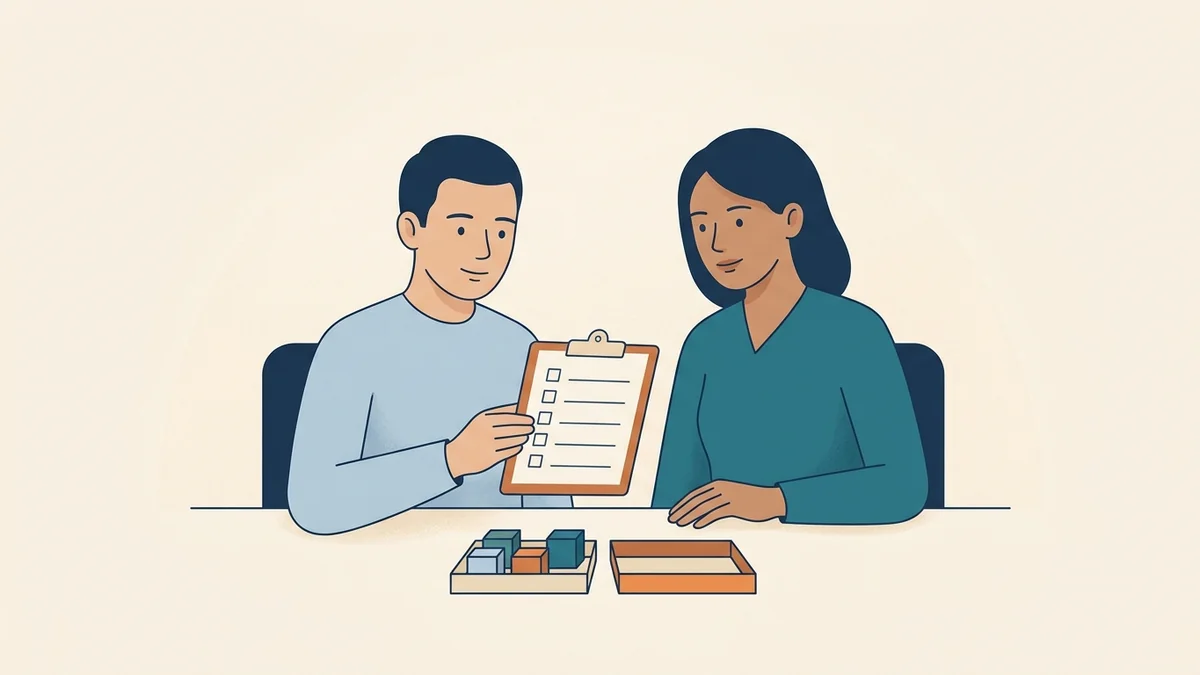
A client uses a checklist to self-monitor task steps. The RBT observes that the client records the last step even though it wasn’t completed. What is the most appropriate next step?
A. Assume the client understands and continue with the system.
B. Stop the system and abandon self-monitoring for this client.
C. Conduct an accuracy check, document the mismatch, and review expectations with the client.
D. Increase reinforcement until the client records correctly.
The Answer: C
C is the one. The client’s checklist says the last step happened. You saw that it didn’t. So right now, the self-monitoring data can’t be trusted.
An accuracy check means comparing what the client recorded with what you actually observed. You write down the mismatch in plain, objective terms, then go over with the client what counts as “done” for that step. Your supervisor sees the note and decides if anything about the program should change.
This is the heart of task A.8 in the RBT Test Content Outline (3rd Edition): knowing the risks of unreliable data. If nobody checks, every graph built on that checklist is quietly wrong.
Why the Other Options Are Wrong
- A. Assume the client understands and continue. You’ve just seen evidence that they don’t, or at least that the record isn’t accurate. Carrying on means the data keeps drifting from reality, and your supervisor makes decisions from it.
- B. Stop the system and abandon self-monitoring. Way too far. One wrong tick is a teaching moment, not proof the program has failed. Dropping a program is also a clinical decision, and section 2.02 of the RBT Ethics Code (2.0) has you follow your supervisor’s direction.
- D. Increase reinforcement until the client records correctly. Changing reinforcement is a change to the plan, which isn’t your call. And if the reward is tied to filling in the checklist, more of it might just get you more ticks, accurate or not.
What This Looks Like in a Real Session
- Notice the mismatch, and stay neutral. No telling off.
- Compare the checklist with what you saw, step by step.
- Write it down objectively, for example “marked step 6 (put away materials) as done; materials were still on the table”.
- Calmly go over with the client what “done” looks like for that step, as the plan allows.
- Tell your supervisor the same day, so they can decide whether the checklist or the teaching needs to change.
Which Exam Tasks This Tests
Mostly A.8, the risks of unreliable data and poor procedural fidelity. A checklist of task steps also links to C.5 (task-analyzed chaining). And E.1 and E.4 come in because you pass the concern to your supervisor and describe what happened objectively.
Practice Variation
A teenager uses a phone timer to self-record whether they’re on task every five minutes. Every box is ticked, but you saw them on their phone for most of the last ten minutes. What now?
Same move. Compare their record with your own observation, document the gap, review what “on task” means with them, and let your supervisor know.
Final Thoughts
When a question shows data that doesn’t match what the RBT saw, the answer is almost never “ignore it” or “scrap everything”. Check it, write it down, re-teach, and report. Want more practice? Try the free data collection quiz, read our guide to measurement in ABA, or work through another worked exam question on procedural integrity. Keep going. You’ve got this!